
Medical evidence
Diagnoses, symptoms, treatment history, clinical observations, medications, procedures, and relevant changes over time.
Built for VA disability practices
VBMS Reviewer turns large VA record sets into structured, source-linked reports that help attorneys and legal teams understand the factual record faster.
Review medical evidence, DBQ findings, lay statements, functional impairment, rating-criteria facts, timelines, prior decisions, and record gaps without losing the connection to the original document and page.
The system supports attorney review. It does not replace professional legal judgment.
The review challenge
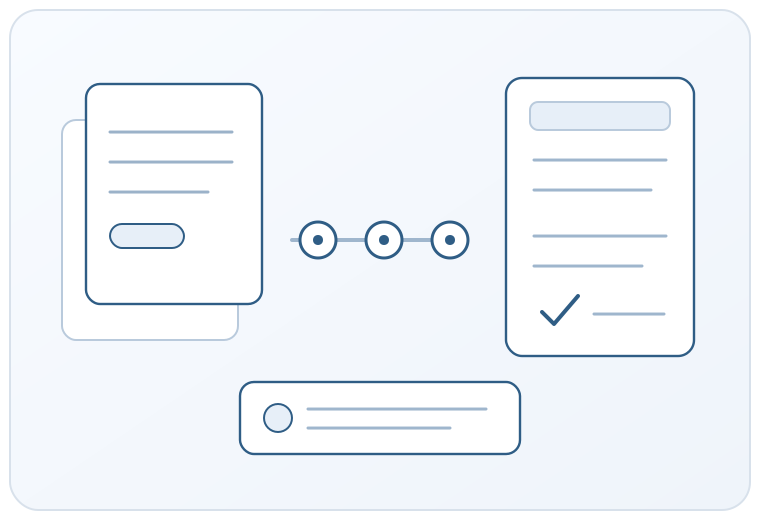
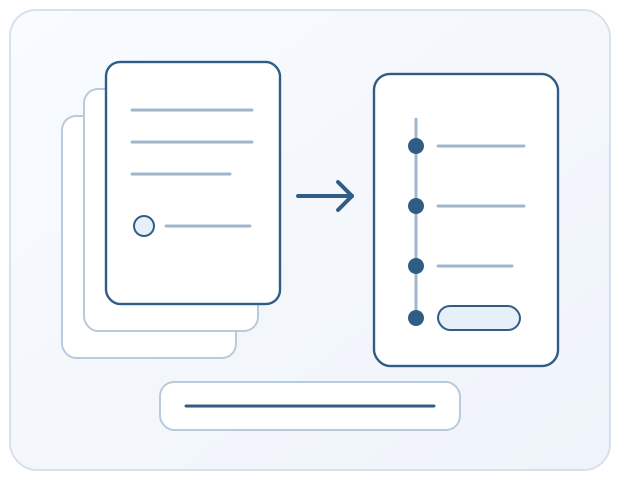
A VA disability case may contain thousands of pages across service treatment records, examinations, DBQs, rating decisions, medical notes, lay statements, correspondence, and prior appeal documents.
The challenge is rarely limited to finding one document. The case team must connect evidence across time, identify which facts support or conflict with the claimed condition, understand what the VA previously decided, and preserve a reliable path back to every source.
Manual review remains essential, but repetitive extraction, chronology building, and citation work consume time that attorneys and experienced staff could spend on legal analysis, client strategy, and case development.
Organized evidence
Diagnoses, symptoms, treatment history, clinical observations, medications, procedures, and relevant changes over time.
Documented findings that may correspond to VA rating criteria, including measurements, examiner observations, and functional limitations.
Statements from the veteran, family members, coworkers, and other witnesses, preserved separately from medical conclusions.
Evidence describing the effect of the condition on work, mobility, sleep, concentration, daily activities, and social functioning.
Applications, examinations, decisions, appeals, supplemental filings, effective-date signals, and other material events in chronological context.
Missing records, conflicting dates, unsupported conclusions, incomplete examinations, and factual issues that may require closer attorney review.
Two review formats
VBMS Reviewer supports two separate outputs. Both begin with the underlying record and retain source-level references.
A factual, evidence-first review of the complete record.
It organizes medical findings, DBQs, lay evidence, functional impairment, rating-criteria facts, timelines, record gaps, and exact citations without presenting the report as a substitute for legal judgment.
View Evidence Review ExampleA case-development review built on the underlying evidence.
It adds issue prioritization, condition status, potential claim or appeal paths, effective-date signals, proposed next steps, and an attorney-facing briefing for professional verification.
View Strategic Review Example| Capability | Evidence Review | Strategic Review |
|---|---|---|
| Medical and DBQ evidence | Yes | Yes |
| Source and page citations | Yes | Yes |
| Timeline and record gaps | Yes | Yes |
| Rating-criteria facts | Yes | Yes |
| Issue prioritization | No | Yes |
| Possible claim or appeal paths | No | Yes |
| Proposed action plan | No | Yes |
| Attorney verification required | Yes | Yes |
Law-firm workflow
The case team uploads the available C-file or related VA record set through the existing onboarding workflow.
Documents are processed into categorized findings, chronology, source references, and review flags.
The report provides a faster route to relevant evidence, while the attorney evaluates legal significance, credibility, and procedural options.
The output can support internal review, client preparation, evidence requests, drafting, and further investigation.
Professional users
VBMS Reviewer is intended for professional teams reviewing VA disability matters:
It is most useful where the record is large, fragmented, repetitive, or difficult to review consistently within the available staff time.
Source-level review
A summary is only useful when the legal team can verify it.
VBMS Reviewer is designed to retain references to the source document and page so that attorneys and staff can return to the underlying evidence, review context, and decide how much weight the finding deserves.
The report is a review aid, not the evidentiary record itself. Learn more about the underlying VA C-file review software workflow.
Pilot review
VBMS Reviewer currently works through direct onboarding. A pilot review is the simplest way to evaluate the output against the type of C-files your practice already handles.
First C-file analysis free. No credit card. No commitment.